/tags/reading
#Reading

-
Paulo Pinto
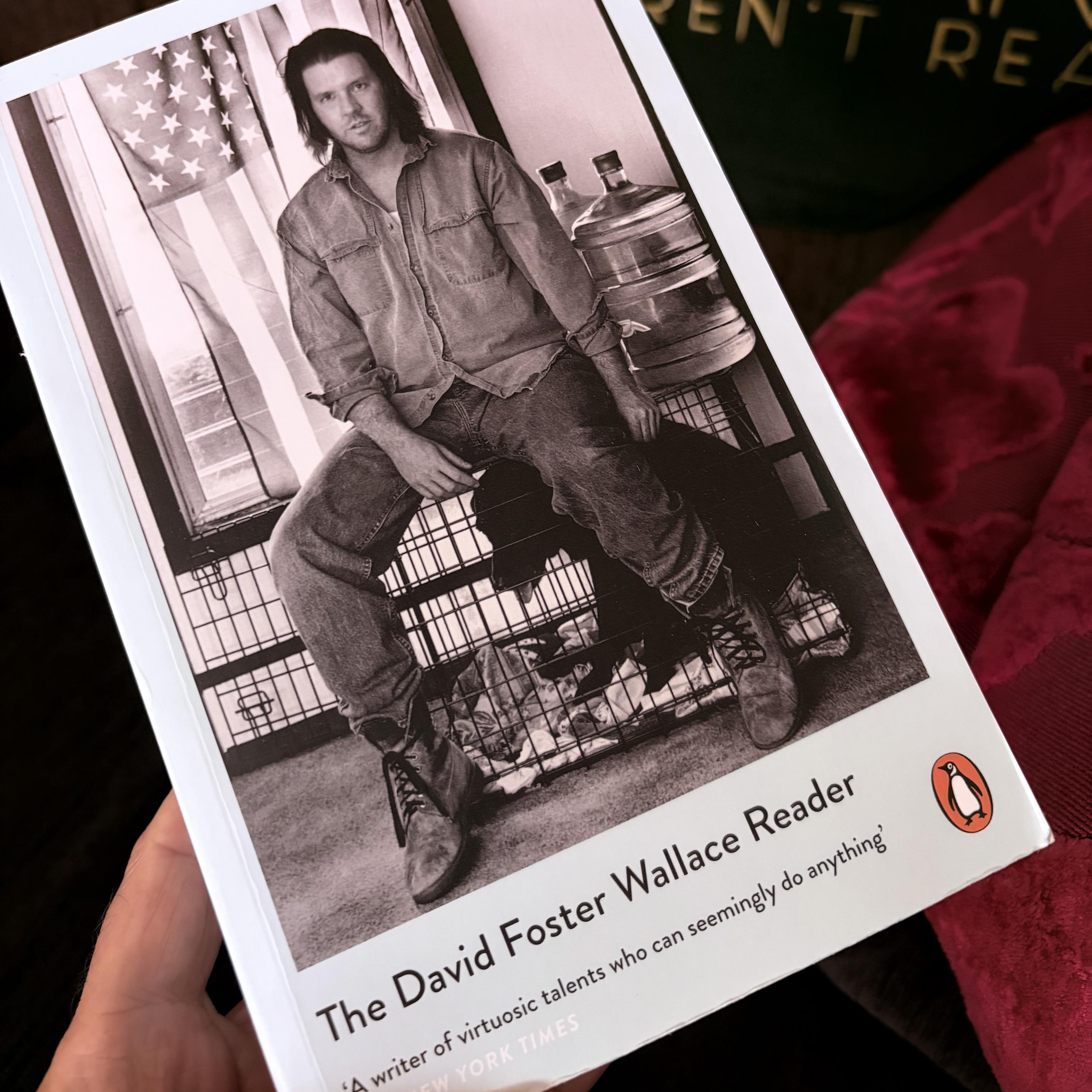
Pages 10–12 of the Reader contain the text’s most frequently quoted and most disturbing passage: an attempt to describe, from the inside, what The Bad Thing (depression) is. DFW rejects the usual metaphors and attempts an honest phenomenology of depressive suffering. The result is at once almost clinically precise and literarily devastating — the reader does not read about depression; they are forced briefly to inhabit its interior.
-
Paulo Pinto
Trying to understand a little bit better the mind of the great David Foster Wallace
-
Paulo Pinto
Reading Why the World Does Not Exist by Markus Gabriel — immersed in the provocative challenge to metaphysical assumptions: the idea that “the world” is not a single, all-encompassing whole. New Realism raises questions about the existence of independent objects, the relationship between thought and reality, the role of the senses and language in constituting the real, and how different fields of sense interrelate without a common world. The clarity of the arguments and the surprising implications have been thought‑provoking.
-
Paulo Pinto
I keep returning to the idea that serendipity is one of the few good arguments left for slow, undirected reading. Algorithms feed us more of what we already like; chance encounters — a footnote, a stranger’s bookshelf, an FM station picked up on a quiet evening — do the opposite.
-
Paulo Pinto
Returning to Becker after a few years away. The argument that we are simultaneously biological and symbolic creatures — and that almost everything we build is in tension with that doubleness — lands differently each time.